Emergent Order
Beyond biology
Our world is full of emergent order: full of things that weren’t built intentionally, but appear to have been designed by something anyway.
The obvious example is life. Any species of any kingdom that’s alive today has gone through over 3 billion years of ruthless optimization to fit it perfectly into its environment. Wholly spontaneously, such intricate detail and ingenuity has emerged in the land of biology that the prevailing idea for most of history was that this could only have been achieved by an intelligent supernatural agent, by a god or gods.
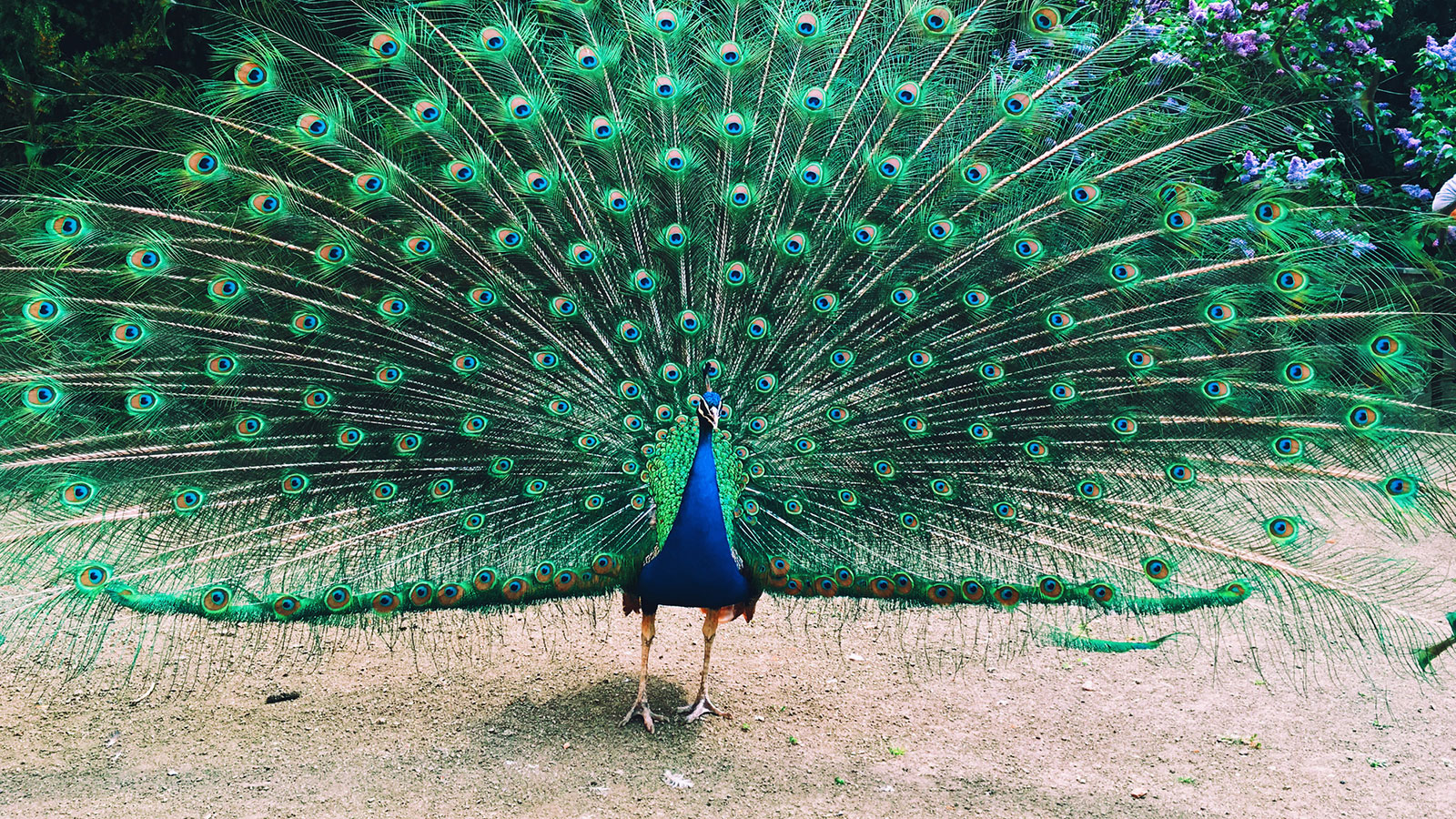


Maybe anything capable of creating all of these designs is a god in some sense. Or at least it deserves some sort of god-like reverence.
Anyway, we’re all already familiar with, and have ample respect for, biological evolution. We recognize that it’s done a nearly perfect job of creating organisms that are prepared to survive in a competitive environment. None of us look at a lion or a redwood tree and think, “it would have been better off if I had been the designer.” We trust that nature has learned the good ideas and killed the bad ones.
But I don’t think life is the only place we see emergent order. Evolution is a more general phenomenon than that – it’s a process that happens in any system with replicators. Over time, replicators that are better at replicating come to dominate the system; and due to occasional imprecisions in copying, some replicators create descendants that are even better than themselves.
In biology, the replicator is the gene. Those genes that make an animal more likely to survive and reproduce will be better represented in the gene pool of the next generation. And out of a hundred mutations, even if ninety-nine are neutral or bad, maybe one just happens to be good: say, a mutation to make a bird’s beak slightly sharper in an environment with tough seeds. The gene pool marches on towards better and better replicability.
Now, consider culture. Culture is full of replicators! Ideas bounce from person to person, from group to group. The catchy ones get repeated (replication), and the others die out. Sometimes you hear an idea, slightly misremember it or add your own spin, then pass it along to somebody else (mutation). The space of ideas that comprises our culture, much like the gene pool that comprises our species, is highly ordered.
Consider norms in particular, a subset of the whole idea space. What sorts of norms do we have? Well, the ones that did the best job of replicating. What makes a norm good at replicating? Sometimes properties that are not so good. Some norms, when everyone else is following them, are hard to deviate from, allowing them to grow and persist over time. But often, norms replicate because they add things to our lives, or improve our relationships, or make our community more stable, or do something else that makes a person take notice and say “I should start acting like this too.”
Or, consider political structures. By perhaps a looser analogy, evolution happens here as well: laws replicate across borders by being good enough that neighbors want to implement them, and over time by being good enough to not get overturned. Liberalism, having been observed to be by far the best political solution we’ve yet come up with, is currently replicating across the world. Of course, what makes a piece of politics replicate is the degree to which it is attractive to people in power, who can both act selfishly and make benevolent mistakes. But political leaders are ultimately beholden to the support of others, and the common people tend to make themselves heard if they’re frustrated. The political systems we live in today are, among other things, a culmination of a long process of shedding off slightly worse features for slightly better ones.
But while nobody has any notes to offer to biological evolution, there is no such hesitation when it comes to cultural or political critiques. This is for good reason, surely – the emergent orders in culture and politics are optimized for things that overlap with, but are not the same as, the interests of humanity. We also have some agency over the optimization processes at hand, which are continually in progress – healthy discourse makes it easier for good things to replicate.
Nevertheless, I think more respect is due to these emergent orders – more acknowledgement that the processes that endowed us with our current social systems are much like the process that endowed the peacock with its feathers. In general, we should expect a given feature of a social system to be not random, nor designed by some nitwit, but rather to have emerged for a specific purpose. We should expect that the world was worse before that feature came along.
This is essentially an argument for conformity and conservatism. If you haven’t thought really hard about the system you’re in, the best move may be to just follow the rules that everybody else follows, support the political structure that currently exists, and resist other people’s pushes for change. Even if you have thought really hard, you should still hesitate. Evolution is methodical and intelligent, and it’s easy to break things.
G.K. Chesterton articulates this well:
There exists in such a case a certain institution or law; let us say, for the sake of simplicity, a fence or gate erected across a road. The more modern type of reformer goes gaily up to it and says, "I don’t see the use of this; let us clear it away." To which the more intelligent type of reformer will do well to answer: "If you don’t see the use of it, I certainly won’t let you clear it away. Go away and think. Then, when you can come back and tell me that you do see the use of it, I may allow you to destroy it."
This is also an argument about how to do progressivism the right way. If you have ambitions to change a system that already has emergent order, you should frame your goal as such. You should be looking for the one mutation in a hundred that presents an improvement, or trying to close the gap between the thing being optimized for and the interests of humanity. You should understand that these are hard to do, and be afraid that the world might be worse off for your efforts.
✦